Medicinal
Guácimo
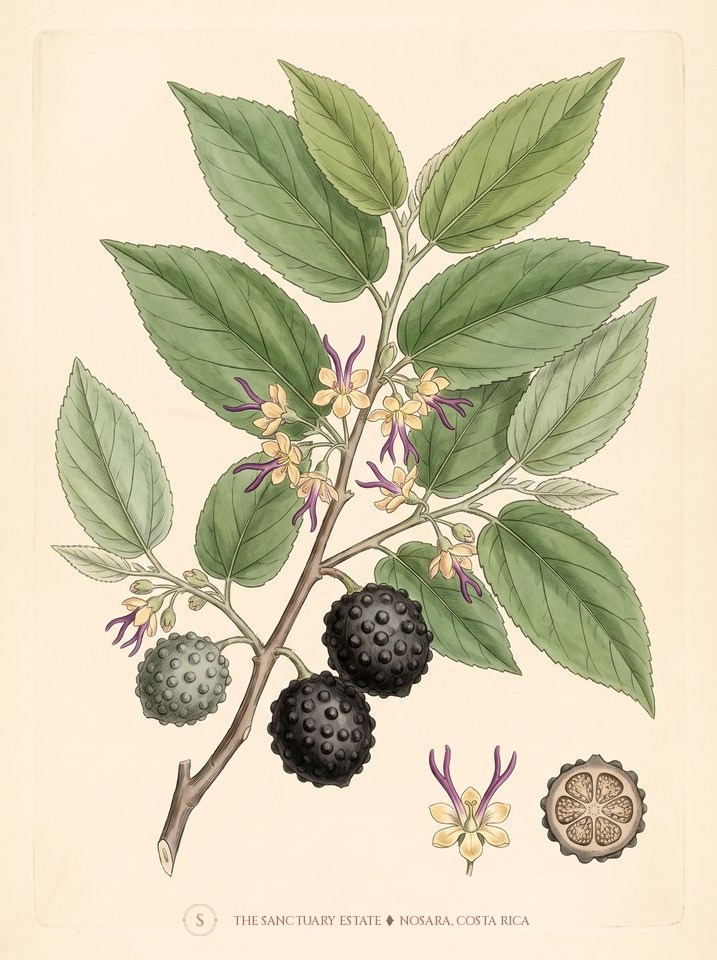
Guazuma ulmifolia Lam.
Mexico to tropical South America
Fun factA single horse may eat hundreds of guácimo fruits in one meal and pass viable seeds in its dung days later. Daniel Janzen argued that the fruit was originally dispersed by Ice Age megafauna, a role horses and cattle now fill.
The guácimo is a small to medium deciduous tree of the seasonally dry Pacific lowlands, very common in Guanacaste along roads, in pastures, as living fence posts and in regenerating forest. It is a sun-loving pioneer that colonizes cleared ground, which is why it is so often already present on old farmland. Its hard, warty black fruits fall in the dry season and are eaten eagerly by horses and cattle, as well as by tapirs, peccaries, coatis and ctenosaurs, which pass the small seeds in their dung. The leaves and young stems have long been cut as dry-season fodder for livestock.
Sourced · see Record tab
Wildacross the estate
FamilyMalvaceae
Spanish nameGuácimo
Also known asWest Indian elm, Bastard cedar, Bay cedar, Pigeon wood, Guácima
Native toNative from Mexico through Central America and the Caribbean to tropical South America (south to Paraguay and northeast Argentina), including Costa Rica; introduced in parts of tropical Asia and the Indian Ocean islands.
Grows wild across the estate.